Plant Based
What is Plant Based/Vegan?
To clear things up, veganism isn’t just about being picky with the food you are eating…
Veganism: The principle of the emancipation of animals from exploitation by man
Who goes vegan, and why?
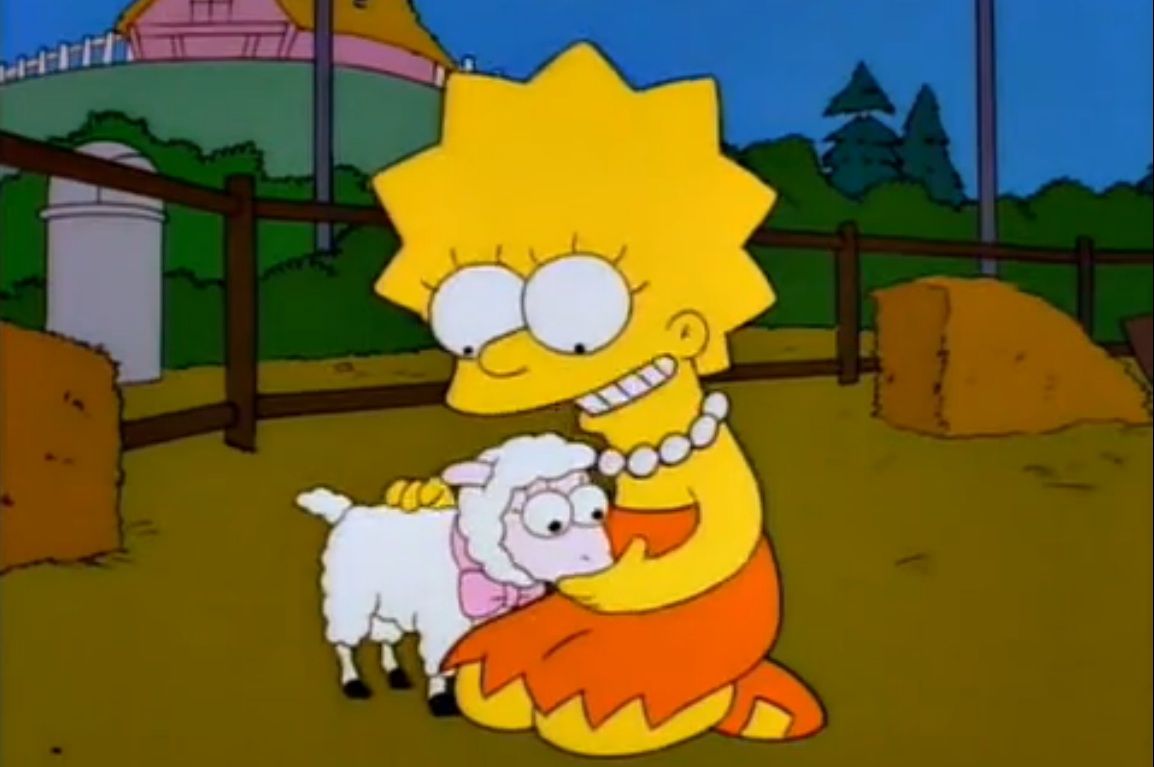
In an attempt to inject a sense of continuity into my blog, here's another picture from the Simpsons! This frame is taken from the episode 'Lisa the Vegetarian', when Lisa becomes conscious of the causal link between consuming meet and slaughtering animals
Plant-based diets and veganism are becoming mainstream in many countries including the UK. According to a 2019 poll1 surveying people from almost 100 countries, the most popular reason to adopt a vegan diet is for animals (68%). However a significant number adopt the diet primarily for health benefits (17%), or the environment (10%).
Some vegans who adopt the diet solely for health benefits use the term “plant based” diet. Due to the high calorific content of oils, those looking for benefits may also avoid cooking oils or other unhealthy foods. But this is not such health choices are not really relevant or related to being vegan for animal ethics reasoning.
A vegan diet can be extremely healthy (despite what you might think when you see my high biscuit intake…). The NHS has published its own advice for ensuring a healthy vegan diet2. They have reported on many health benefits including diabetes type II risk reduction3, and suggest that the diet can be helpful for achieving and maintaining a healthy weight.
Ethical Reasoning
Environmentalism
I don’t think it is particularly necessary or helpful to describe my motivations for a vegan diet as solely for either the animals or environment, but instead as a response to an overwhelming number of positive arguments outweighing negative ones.
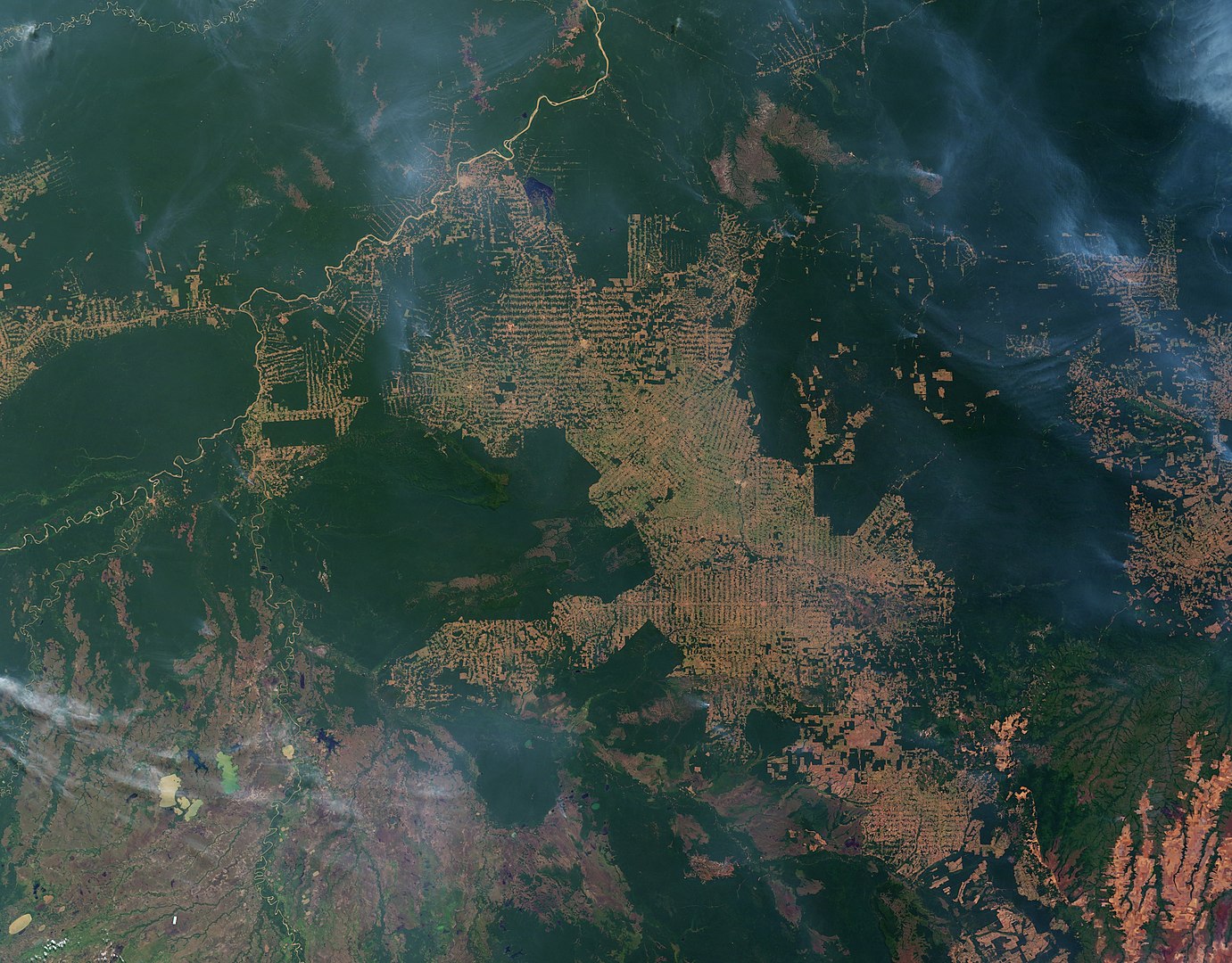
Deforestation of the Amazon. Intact forest is deep green, while cleared areas are tan (bare ground) or light green (crops, pasture, or occasionally, second-growth forest) http://earthobservatory.nasa.gov/IOTD/view.php?id=38782
The most convincing argument for me to turn vegetarian (before becoming vegan) was for the environment. Have a go at calculating the emissions from your current diet using a CO2 equivalent emissions calculator4. Most UK made animal produce now comes from ecocologically destructive factory farms5. Large swathes of rainforest are chopped down so that feed can be grown for cattle, to supply a growing international demand for meat. The intensive farming processes used degrades the soil and requires large amounts of fertiliser. Deforestation of the Amazon rainforest is largely due to the Brazilian beef industry6, the largest in the world.
In order for the ever rising global demand for meat to be met, we require more and more land to grow crop for intensively farmed animals, causing an ever rising amount of agriculture attributed CO2 equivalent emissions, and degradation and destruction of nature.
What about smaller scale non factory farming, is it possible to switch back and enjoy some good old British beef7? The answer is overwhelmingly no8,9, because more traditional animal agriculture still wastes huge amounts of resources and land. Roughly twice as much land is used for grazing worldwide as for crop production, but grazing provides just 1.2% of the world’s protein10. Traditional farming cannot meet the current demand for meat and animal produce.
If we want to reduce the impact our diet has on climate change and nature, we can be generous to ourselves and on a weekly-monthly basis enjoy small quantities of less resource intensive animal produce (chicken, dairy, egg), whilst waving goodbye to red meats.
Animal-ethics
On the other hand, if the UK switched solely to plants, we could be not only self sufficient, but an exporter of foods.
The most low-carbon way to produce meat and animal products, and to meet high demand, is through factory farming. This method of production is abhorrent: watch “Land of Hope and Glory” or “Earthings” and ask yourself if you are comfortable making the choice of meat over plant alternatives?
So one can quickly reach the same conclusion from an environmental and animal-ethics perspective: consume a lot less meat and animal produce!
Economic pressures force traditional farms to produce as much as possible from their limited resources. Modern farm animals are bread to be as fat and efficient as possible, often leaving them with greatly reduced lifespans. Farming standards such as red tractor11 or RSPCA12 approved are unable to guarantee ethical treatments of animals before slaughter.
If we ignore the pressure of capitalism to exploit animals, and imagine a hypothetical farm where all is done in the interest of the animals, there still remain many ethical dilemmas including:
- Meat can only be produced by slaughtering animals
- Milk production results in the slaughter of ‘unwanted’ male calves.
- Modern farm animals are bread to unhealthy proportions to maximise profit; measures to address this will probably result in more expensive and resource intensive food.
To me, it seems like the arguments for animal agriculture require imagining hypothetical socialist paradise farms, where measures taken to assure ethical treatment are often counterproductive to profit and environment.
It makes sense to choose veganism.
Veganism is not Consumerism
As a footnote to this blog post, I want highlight that my diet is not a consumer choice, but something closer to an ideology or counter-culture stance.
I want to see justice for animals, and for the environment. And I want to see justice for humanity. Justice for all people who trapped in exploitative labour practices to increase the private wealth of the wealthy. Justice for those impacted by war or environmental disasters. Justice for those who do not have sure access to basic needs like shelter and food.
There may be some occasions where eating meat is ethical, and it depends on personal circumstance and situation.
More broadly, there are many who don’t have the means to prepare vegan meals when ensuring access to food and a healthy diet remains a fundamental challenge.
But that is missing the point. Even if we can’t make all of the changes we want to on an individual level, we should make the changes we feel able to, and help others to make positive changes too.
revised 2021-02-09 for readability
https://vomadlife.com/blogs/news/why-people-go-vegan-2019-global-survey-results ↩︎
https://www.nhs.uk/news/diabetes/going-vegan-may-help-prevent-diabetes-overweight-people ↩︎
https://www.thebureauinvestigates.com/stories/2017-07-17/megafarms-uk-intensive-farming-meat ↩︎
https://www.onegreenplanet.org/animalsandnature/beef-production-is-killing-the-amazon-rainforest ↩︎
On the same day that the IPCC published its “Climate Change and Land Use” report, Michael Gove chose to promote British beef https://twitter.com/michaelgove/status/1159537094152400896 ↩︎
http://www.ox.ac.uk/news/2018-10-12-balanced-plant-based-diets-improve-our-health-and-health-planethttp://www.ox.ac.uk/news/2018-10-12-balanced-plant-based-diets-improve-our-health-and-health-planethttp://www.ox.ac.uk/news/2018-10-12-balanced-plant-based-diets-improve-our-health-and-health-planet ↩︎
https://www.theguardian.com/commentisfree/2018/jun/08/save-planet-meat-dairy-livestock-food-free-range-steak ↩︎
https://veganuary.com/myths/i-only-buy-high-welfare-meat-and-dairy-and-free-range-eggs-those-animals-are-happy/ ↩︎